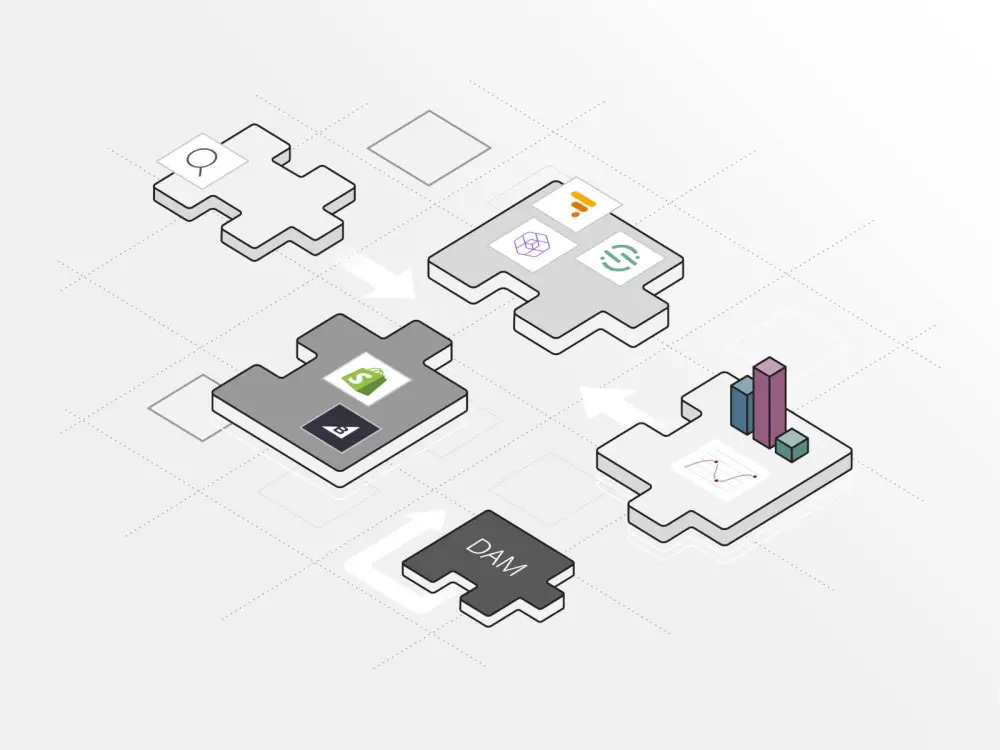
Brightspot and Contentstack both lead with API-first architecture, but they take different positions on who the platform is built for.
Below, we cover the key differences between Brightspot and Contentstack: architecture, editorial and developer experience, AI capabilities and total cost of ownership.
- The core architectural difference is who builds the platform. Brightspot is hybrid: API-first delivery paired with a full editorial interface, preconfigured content types and built-in workflows. Contentstack is API-only, so the editorial layer, integrations and front-end experience all have to be built by your development team.
- Editorial independence looks very different on each platform. Brightspot is designed so content teams can publish, manage workflows and configure the platform without developer involvement. On Contentstack, routine publishing tasks and workflow changes typically require developer support.
- Time to value favors Brightspot. With pre-built integrations, out-of-the-box content types and a managed services model, most organizations can get operational quickly. Contentstack’s flexibility comes with a longer build phase before content teams can engage.
- The total cost picture is broader than the license fee. Brightspot’s pricing consolidates what you need into a predictable model. With Contentstack, the custom development required to stand the platform up, integrate third-party tools and maintain workflows over time can scale the true cost of ownership well beyond the headline number.
Brightspot vs. Contentstack: At a glance
When evaluating Brightspot vs. Contentstack, the question to ask is how much you want your content team to do without involving a developer.
Brightspot takes a hybrid approach: headless API delivery, a full editorial interface, built-in workflow tools, pre-built integrations and enterprise capabilities that work out of the box. Developers get flexibility, and content teams can publish without waiting for a build to finish.
Contentstack is a developer-centric headless CMS with strong API and SDK capabilities, built for technical teams that want full control over how digital experiences are constructed and delivered. The platform requires dedicated development resources to build a fully custom stack from the ground up.
Brightspot vs. Contentstack: Feature comparison
| Feature | Brightspot | Contentstack |
| Architecture | Hybrid (headless + traditional) | Headless (API-first) |
| Editorial experience | Built-in, full UI | Basic, developer-configured |
| Developer flexibility | High | Very high |
| AI capabilities | Built into editorial workflow | Available, requires configuration |
| Multisite / multi-brand | Native support | Available, requires configuration |
| Workflow management | Built-in | Limited, requires custom development |
| Personalization | Integrated | Requires third-party integrations |
| Implementation speed | Faster out of the box | Slower without dev resources |
| Total cost of ownership | Predictable | Can escalate with dev and integration needs |
Brightspot vs. Contentstack: Key differences
Architecture
Deciding between a hybrid CMS and a pure headless platform?
Brightspot takes an API-first approach that supports headless, decoupled or both at once. It’s backed by preconfigured content types, a built-in theme engine and editorial tools that make it easy to start publishing quickly.
Contentstack is API-only, which means every front-end experience, workflow, editorial configuration and integration has to be modeled and built by your development team. For organizations with strong developer resources that want complete control over every layer of the stack, that flexibility is the point. For teams that need content operations to move independently of the development queue, it can be a constraint.
Editorial experience
Brightspot’s editorial interface is built around the needs of content teams: a clean authoring environment, rich-text editing, built-in preview, collaborative tools and customizable workflows that non-technical users can manage from day one.
Contentstack’s authoring interface is functional but minimal by design. The platform is built around developer customization, so workflows, roles, previews and content configurations all require upfront development work to set up.
Developer experience
Brightspot gives developers a well-documented, extensible framework, but the platform is designed so most day-to-day publishing tasks don’t require their involvement, freeing engineering resources for higher-value work.
Contentstack is built primarily for developer teams, with a strong set of APIs, SDKs and documentation that give technical users significant control over how content is modeled, delivered and integrated.
AI capabilities
Brightspot treats AI as a native part of the publishing experience. Capabilities like automated metadata tagging, AI-assisted writing, content recommendations and smart image management are built into the platform and available to editorial teams without additional setup.
Contentstack offers AI capabilities, but consistent with its broader architecture, they require developer configuration to surface and integrate into content workflows.
Speed to market
With preconfigured content types, ready-to-use integrations and an editorial interface that content teams can work in from day one, Brightspot shortens the runway between platform selection and productive publishing.
Contentstack’s developer-first model means most of the work to make the platform operational (workflows, front-end delivery, integrations, editorial configurations) has to be built before content teams can engage.
Time to value
Brightspot’s out-of-the-box functionality (pre-built content types, ready-to-use integrations and a full editorial interface) means teams can start generating output early in the implementation, well before a lengthy build is complete.
Contentstack’s value comes after the development work required to stand the platform up is done.
Scalability
Brightspot is built to absorb complexity as organizations grow their digital footprint, without requiring a platform rebuild or a proportional increase in technical resources. Multisite management, localization and workflow governance are handled natively.
Contentstack scales well for developer-led organizations managing high volumes of API-driven content delivery across multiple channels and touchpoints. As content operations grow in complexity, the platform’s reliance on developer involvement for workflow and configuration changes can create bottlenecks.
Total cost of ownership
Brightspot’s pricing is built to stay predictable over time. Managed services, implementation support and extensive out-of-the-box functionality reduce the reliance on costly custom development.
Contentstack’s total picture grows quickly once development resources, custom integrations, third-party tooling and ongoing maintenance are factored in.
When to choose Brightspot
- You want API-first flexibility without needing a dedicated development team to stand the platform up.
- You need editorial workflows, governance and content types built in.
- You manage multiple sites or brands and need native multisite support out of the box.
- You need content teams to publish independently, without developer dependency.
- You want predictable costs without the overhead of extensive custom development and third-party integrations.
When to choose Contentstack
- You have a strong internal development team with the capacity to build and maintain a fully custom platform.
- You want complete control over every layer of the front-end experience.
- You’re building a developer-first, API-driven content architecture from the ground up.
- You have the timeline and engineering resources to absorb the upfront build before content teams can operate.
Migrating from Contentstack to Brightspot
Replatforming to Brightspot from Contentstack happens when:
- The developer overhead required to keep the platform running has grown beyond what the team can sustainably support.
- Editorial teams are still dependent on developers for day-to-day publishing tasks despite significant platform investment.
- The cost of custom development, third-party integrations and ongoing maintenance has made total cost of ownership harder to justify.
- Content operations have grown complex enough that the platform’s limited native workflow and governance tooling has become a bottleneck.
Brightspot vs. Contentstack: FAQs
Brightspot is a strong fit for organizations that need API-first flexibility without the developer dependency that comes with a pure headless platform. Contentstack tends to work well for developer-led teams that want complete control over a custom-built stack.
Yes. Brightspot is designed so editorial teams can manage workflows, publish content and configure the platform independently. Contentstack’s editorial interface requires significant developer setup before content teams can work effectively.
The most common triggers are editorial friction, developer dependency and total cost of ownership.
Brightspot’s pricing is more predictable over time. Contentstack’s base cost can look accessible upfront, but tends to grow as custom development, third-party integrations and ongoing maintenance are factored in.
Brightspot is built for organizations that need to scale content operations across multiple sites, teams and brands without proportionally scaling their technical overhead. Contentstack scales well for API-driven content delivery, but as content operations grow in complexity, the platform’s limitations around native workflow and governance tooling start to show.
Find the right fit: Compare Brightspot to your current CMS
Whether you’re actively evaluating platforms or just starting to ask questions about your current CMS, our team can walk you through a direct comparison and help you figure out if Brightspot is the right fit for where your organization is headed.