Enterprise personalization has changed. What used to be static audience segments and brittle if/then rules is now adaptive, with real-time content delivery based on behavioral signals and machine learning. For buyers evaluating a CMS today, the critical question is whether a platform can provide personalization natively, without forcing teams to stitch together external CDPs, front-end personalization engines and third-party testing tools. This guide examines six enterprise CMS platforms through the lens of personalization architecture, built-in experimentation capabilities and practical trade-offs. The goal is to help you identify which platform can provide measurable, scalable personalization without unnecessary complexity.
- Personalization has shifted from static, rules-based segments to adaptive systems that learn from real-time behavioral signals.
- Brightspot is the only platform in this comparison with fully native A/B testing built into the editorial workflow.
- Contentstack, Contentful and Sanity all require a separate CDP, third-party tool or custom code to run experiments.
- Sitecore XM Cloud and Uniform offer partial native testing, but advanced personalization still requires additional licensed products or integrations.
- Every additional tool in a bolt-on personalization stack adds its own integration, data pipeline and maintenance burden.
- Sanity offers the most engineering flexibility but no self-service path for marketers to run experiments.
- The right platform depends on whether your team wants personalization owned by editors inside the CMS or built by developers across a multi-tool stack.
For much of the last decade, CMS-driven personalization meant manually defining audience segments (for example, “returning visitor from California sees banner A”) and relying on static rules that often did not hold up as traffic patterns changed. This rules-based approach was labor-intensive, fragile at scale and disconnected from real-time user behavior.
The industry has moved toward adaptive personalization, where systems continuously learn from behavioral signals, such as scroll depth, session frequency, content affinity and conversion patterns, and optimize experiences in real time. Some implementations now use autonomous agents to handle tasks like variant generation, audience discovery and performance optimization with minimal human intervention.
There is a practical split among CMS platforms. Some platforms provide native personalization, with experimentation, audience targeting and optimization built into the content management workflow. Other platforms use bolt-on personalization, relying on external CDPs, A/B testing services or edge-side personalization engines.
The operational difference matters. Native experimentation, such as the built-in A/B testing available in Brightspot, reduces integration overhead, eliminates data-sync latency between systems and gives editorial teams direct control over test creation and performance analysis inside the CMS. This shortens the time to value for editorial teams.
Bolt-on approaches introduce architectural complexity. Each additional tool in the personalization stack requires its own integration, data pipeline and maintenance. According to Gartner’s research on marketing technology utilization, organizations use only 33% of their martech stack’s capabilities, a figure that shows the risk of over-investing in disconnected tools rather than choosing platforms with strong native capabilities.
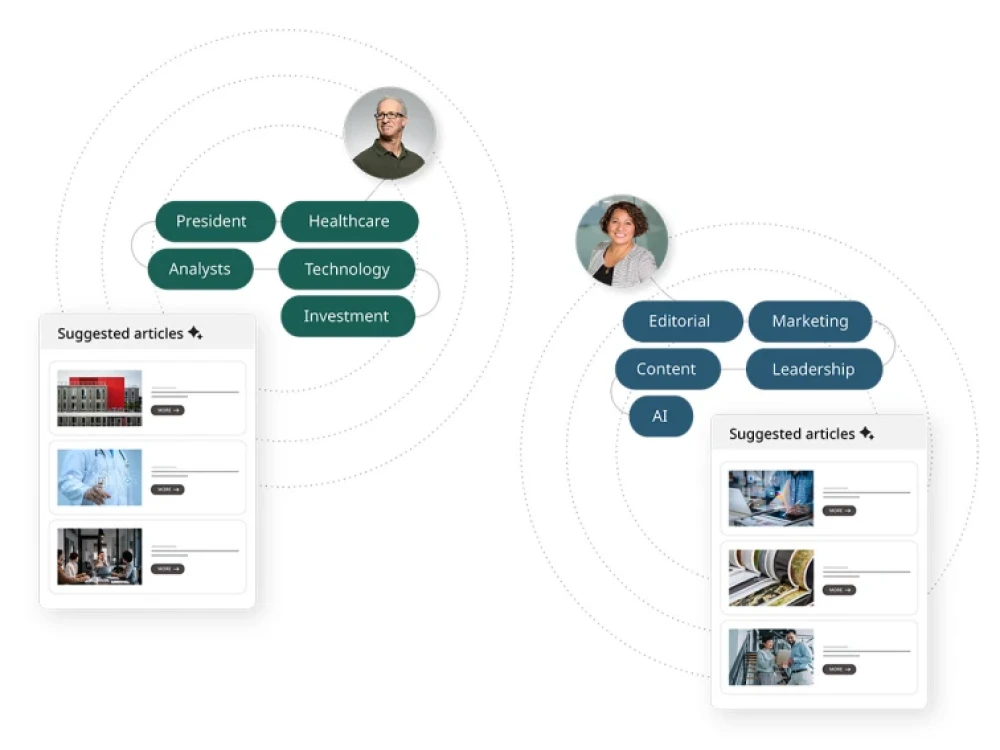
The following table summarizes how six enterprise CMS platforms approach personalization, with particular attention to whether experimentation is built in or requires external tooling.
| Platform | Personalization architecture | Built-in experimentation | Trade-offs |
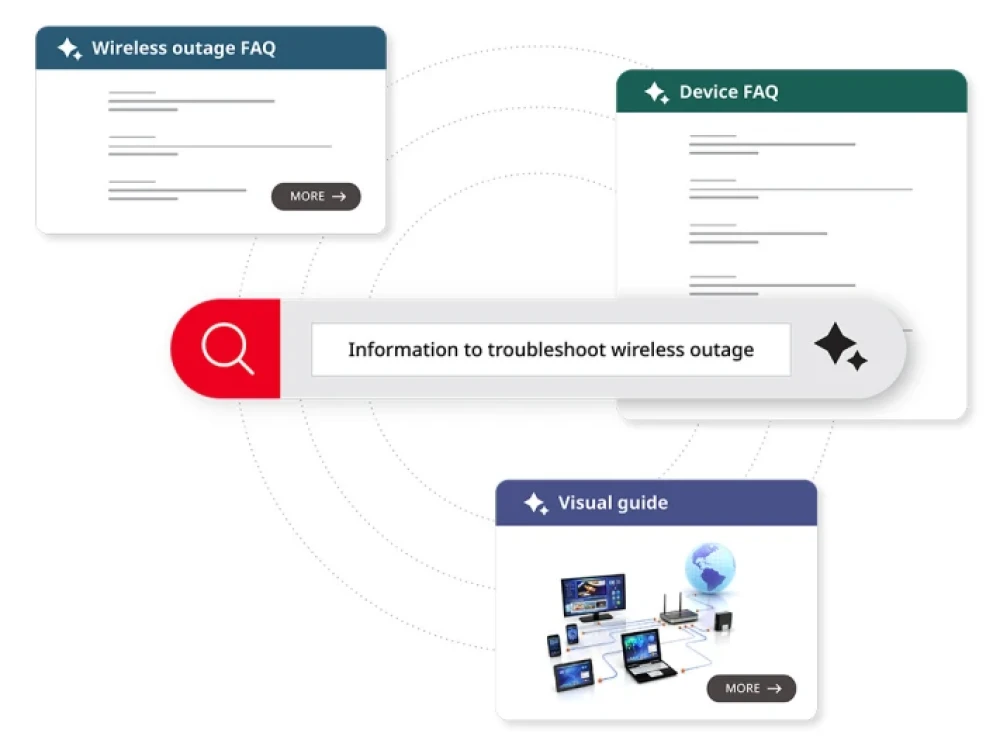
Brightspot
Personalization architecture: Brightspot uses a hybrid architecture that supports both traditional, server-rendered delivery and headless API-driven content distribution. This lets personalization logic run in the CMS regardless of front-end architecture. Brightspot’s native personalization features, including built-in A/B testing, audience targeting and content variation management, are available inside the editorial interface, allowing content teams to create, test and optimize experiences without external tooling. Editors can launch and iterate tests without leaving the CMS.
Integration approach: Because Brightspot is built on an open Java framework, it integrates with enterprise data systems, analytics platforms and identity providers. The core personalization and experimentation features work without those integrations, so teams can start testing immediately and add external data as needed.
Trade-offs: Brightspot’s hybrid model suits organizations that need both editorial control and headless flexibility, but it requires comfort with a Java-based development environment. Organizations committed to a JavaScript-only front-end stack should evaluate how Brightspot’s back-end architecture fits their team’s skill set. For enterprises seeking native experimentation without adding separate personalization and testing platforms, Brightspot is a viable option.
Contentstack
Personalization architecture: Contentstack positions itself as an “Agentic Experience Platform,” combining a headless CMS (Content Cloud) with a separately available Real-Time CDP and autonomous AI agents. Personalization is achieved by connecting customer data from the CDP to content delivery, enabling adaptive experiences based on behavioral and contextual signals.
Integration approach: Contentstack is API-first and composable. Personalization capabilities are distributed across the core CMS, the Real-Time CDP and the Agent OS layer. This modular design gives teams flexibility in what they adopt, but achieving full personalization requires purchasing and integrating multiple products within the Contentstack ecosystem.
Trade-offs: Contentstack’s approach to autonomous personalization targets future needs, and its API infrastructure is well-regarded by developer teams. However, the lack of built-in experimentation in the core CMS means A/B testing and content optimization require either the CDP add-on or third-party tools. Organizations that want to start testing content variants quickly without expanding their toolset face a higher barrier to entry compared with platforms that include native experimentation.

Contentful
Personalization architecture: Contentful is a widely adopted headless CMS that treats personalization as an integration concern rather than a core platform feature. Its App Framework lets developers connect third-party personalization and data tools, such as Segment, Optimizely or custom-built solutions, to content delivery workflows.
Integration approach: Contentful’s marketplace and extensibility model make it straightforward to plug in external services. The platform excels at structured content modeling, which provides a solid foundation for programmatic personalization. The actual targeting, testing and optimization logic, however, lives outside Contentful and is managed by whichever tools the development team selects and maintains.
Trade-offs: Contentful’s strength is its developer ecosystem and content modeling rigor. The trade-off is limited autonomy for marketers and editors on personalization. Launching an A/B test or creating a targeted content variant typically requires developer involvement to configure the integration layer. For engineering-led organizations comfortable managing a multi-tool stack, this may be acceptable; for teams that want editorial self-service in experimentation, it is a meaningful gap.

Sitecore XM Cloud
Personalization architecture: Sitecore has long been associated with enterprise personalization, built on years of rules-based targeting and segmentation logic. XM Cloud brings these capabilities to a cloud-native, headless architecture, allowing organizations to define personalization rules within the CMS and deliver them through decoupled front ends.
Integration approach: Sitecore’s ecosystem includes Sitecore Personalize (for advanced testing and decisioning), Sitecore CDP and Sitecore Search, each a separate product. XM Cloud provides baseline personalization, but enterprises seeking sophisticated experimentation, real-time behavioral targeting or AI-driven optimization typically need to license additional Sitecore products or integrate third-party tools.
Trade-offs: For existing Sitecore customers, XM Cloud is a modernization path that preserves institutional knowledge of Sitecore’s personalization model. For new buyers, the total cost and complexity of assembling the full Sitecore personalization stack can be significant. The platform’s legacy depth is both a strength and a burden: powerful capabilities exist, but they are distributed across multiple products with distinct licensing and integration requirements.

Sanity
Personalization architecture: Sanity treats content as structured, queryable data stored in a “content lake.” Its GROQ query language allows developers to fetch and filter content based on virtually any parameter, including external user data, enabling customized personalization logic at the application layer.
Integration approach: Sanity is unopinionated about how personalization is implemented. There are no built-in audience segments, no native A/B testing and no visual personalization workflow. Everything is achieved through code: custom API calls, GROQ queries enriched with user context and application-level rendering logic.
Trade-offs: Sanity offers high flexibility for technical teams building bespoke digital products with unique personalization requirements. The cost is that every personalization capability must be built and maintained by the development team. Non-technical stakeholders have no self-service path to create or manage personalized experiences, making Sanity a poor fit for organizations that want marketers to run experiments directly.
Uniform
Personalization architecture: Uniform operates as an orchestration layer rather than a CMS. It sits on top of existing content, commerce and data systems, providing edge-side personalization by pulling audience signals from connected CDPs and applying them to content components at the point of delivery.
Integration approach: Uniform focuses on connecting fragmented stacks. It ingests content from any CMS, user data from any CDP and product data from any commerce platform, then applies intent-based scoring and personalization rules at the edge. It offers some built-in testing and scoring capabilities, though these are more limited than dedicated experimentation platforms.
Trade-offs: Uniform is suitable for organizations with highly fragmented technology stacks that need a unifying personalization layer without replacing existing tools. However, it adds another system to manage and introduces its own abstraction layer, which can increase architectural complexity. It also does not replace the need for a CMS; it augments one, so total cost includes both Uniform and the underlying content platform.
Personalization increases engagement, conversion and retention by tailoring content to a visitor’s behavior, preferences, location or buyer-journey stage. For enterprises, a CMS with native personalization and A/B testing reduces the operational burden of managing targeted experiences and enables editorial teams to iterate on content within the CMS.
Yes, platforms with built-in experimentation and audience targeting can provide content-driven personalization without a standalone CDP. For broader cross-channel identity resolution and aggregated behavioral data, a CDP is necessary, but for on-site testing and targeted content, Brightspot’s native A/B testing and hybrid execution model cover common use cases.
Identifying marketing personas for personalization
To effectively identify marketing personas for content personalization, start by conducting thorough research. This includes analyzing demographic data such as age, gender, location and education level. Understand their behaviors and preferences through surveys, social media analysis and customer feedback.
Next, delve into psychographics to uncover their interests, values and pain points. This helps in painting a fuller picture of who they are and what motivates them. You should also consider their purchasing decisions and habits to tailor your content accurately.
Once you gather this data, segment your audience into distinct personas. Give each persona a name and a detailed profile, including their goals and challenges. This makes them more relatable and easier to target with personalized content.
Use these personas to craft specific messages and content that address their unique needs. Employing data-driven insights ensures that your content resonates deeply, enhancing engagement and conversion rates.
Creating customized web experiences
Personalized web experiences are crafted by leveraging user data to customize content and design elements. This can be done by analyzing user behavior, preferences and past interactions to display relevant information.
For example, a website can use dynamic content to show different headlines, images and calls-to-action based on the visitor’s previous interactions or demographic data. This ensures that each user sees content that resonates with their interests.
Another approach is the use of personalized landing pages. These pages can adapt based on the referral source, such as a social media ad or email campaign. By tailoring the content to match the visitor’s entry point, you increase the likelihood of engagement and conversion.
Real-time personalization is also effective. By utilizing AI and machine learning, businesses can adjust content on the fly, ensuring it remains relevant as user preferences evolve. This can include personalized product recommendations on e-commerce sites or specific blog posts highlighted for returning visitors.
Moreover, integrating personalized pop-ups and banners based on user actions or geolocation can drive engagement. For instance, showing a discount offer to users from a specific city or promoting a local event can make the user experience more relevant and engaging.
The 4 Ds of personalization strategy are essential to creating a robust and effective content personalization framework. These four components include:
- Data: Gathering comprehensive data about your users is the foundation. This includes demographic information, browsing history, past purchases and engagement metrics. Having rich data allows for more accurate personalization.
- Decisioning: This involves using the collected data to make informed decisions about what content to deliver to each user. Advanced algorithms and AI can analyze patterns and predict preferences, enabling real-time content adjustments.
- Design: Tailoring the design of your content to match user preferences can significantly enhance engagement. This could involve personalized landing pages, dynamic images and customized calls-to-action.
- Distribution: Ensuring that personalized content reaches users through the right channels at the right times is crucial. This might include email campaigns, social media or on-site content adjustments.
Implementing these four elements effectively can lead to a more engaging and personalized user experience.