

TL;DR: Quick takeaways
- AI reliably produces the first 80%: outlines, starting points and first-pass drafts.
- The remaining 20% is human judgment: brand fit, context and named evidence.
- Skipping the 20% is now a larger risk than slow adoption of AI.
- Best practice: outline first, then edit section-by-section as the draft is built.
- Measure AI by what it frees your top people to do, not by word count or pieces shipped.
- Brightspot’s content management system (CMS) enforces the review checkpoint so the human step is part of the workflow, not a reminder.
What does the 80/20 rule mean for content teams?
In 2026, AI gets you 80% of the way there. The remaining 20%, human judgment, determines whether content is trustworthy and distinct.
AI is no longer optional. Most teams use it daily for outlines, drafts, headline options and research synthesis. That creates a new failure mode: teams that stop doing the hard human work after a readable draft ships. The bigger risk today is skipping the human step that makes content yours.
What does AI actually deliver?
AI reliably produces:
- Starting points and outlines you can react to instead of facing a blank page.
- First-pass drafts that save hours compared with starting from scratch.
- Research synthesis: summarizing multiple competitor posts or call transcripts into a usable brief.
- This is real, quantifiable time saved. But it’s not the final product. Treating a smooth draft as final is a trap.

What is the remaining 20%?
The remaining 20% covers:
- Human judgment about brand fit and tone.
- Contextual decisions: what to name, what numbers to cite, which examples to use.
- Specificity and rhythm: replacing generic phrasing with distinct, original language.
You should never let the AI create content and send it directly to the web. You need human oversight to keep your content trustworthy, authentic and aligned with your brand.
How should teams run the 20% in practice?
A repeatable process stops this from being a one-off heroic edit. Here’s a recommended micro-workflow:
- Outline before writing a sentence. Make sure the argument holds at the structural level.
- Build the draft section-by-section. Don’t dump a full AI draft and then clean it at the end.
- Edit each section as it’s created. Catch rhythm, specificity and named evidence early.
- Assign a brand editor who knows the organization well enough to spot what the model misses.
- Track what AI frees your senior staff to do and measure that time against strategic outputs.
Why this approach works
- A clean-sounding paragraph built on a weak structure is still weak.
- Most failures are not factual errors but generic phrasing or missing attribution.
- The review step gets faster with practice, but it never goes away completely.
Why is skipping the 20% riskier than being slow to adopt AI?
Readers are getting better at recognizing generic, “AI-just-dumped” content: tidy three-item lists, smooth transitions that say nothing, claims with no name attached. One piece like that won’t break trust, but repeated patterns do. Over time, a brand that publishes unreviewed drafts blends into the same handful of AI-generated voices. When readers stop expecting distinction, it’s hard to win them back.
Measure AI by what it frees, not what it outputs
Measure AI differently. Track what it frees your best people to do, not how many pieces you publish. That’s the metric that predicts whether your content still sounds like your brand next year. Invest the freed time in the human work that preserves differentiation.
AI-assisted workflows + human-in-the-loop review in action
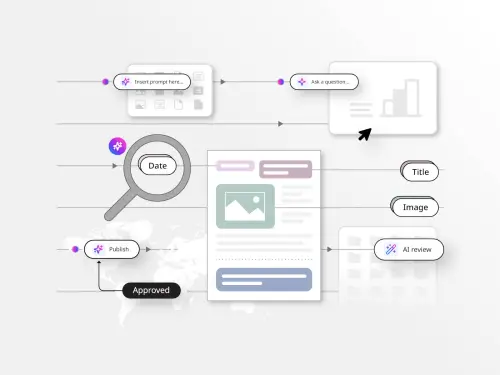
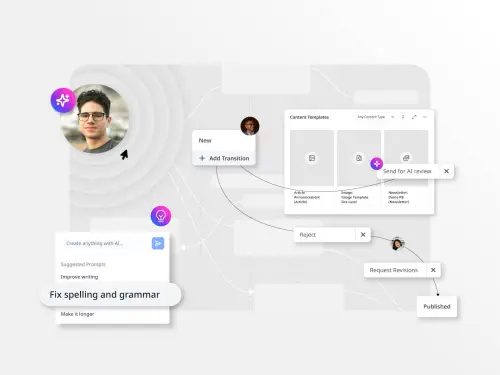
See how Brightspot builds review steps into the workflow as a integral part of the process, not an afterthought. Request a demo to watch approval lanes, role-based gating and editor sign-offs in practice.

Because readable doesn’t mean right. Human judgment supplies brand fit, named sources and the context AI cannot reliably provide.
Make the review a required, enforced step in your CMS workflow (approval lanes, role gates or a mandated editor sign-off).
Someone who knows the brand: a senior editor, content strategist or product marketer, not an external or entry-level staffer who can’t contextualize decisions.
Not if you plan for it. The review step gets faster with practice as well as automated steps and human-in-the-loop gates built in; the ROI is in brand trust and differentiation, not raw throughput.
Measure the time AI frees editorial staff for high-value work and track whether the brand’s distinct voice persists over time.
Yes. Key items: named sources, brand-specific phrasing, unique examples, audience call-to-action and a final accuracy check.
Automation can surface possible issues (citation gaps, factual flags), but it shouldn’t replace human decision-making about brand and context.
Train a rotating senior author to sign off on pieces and insist on the outline-first, edit-as-you-go approach to keep quality consistent.


