
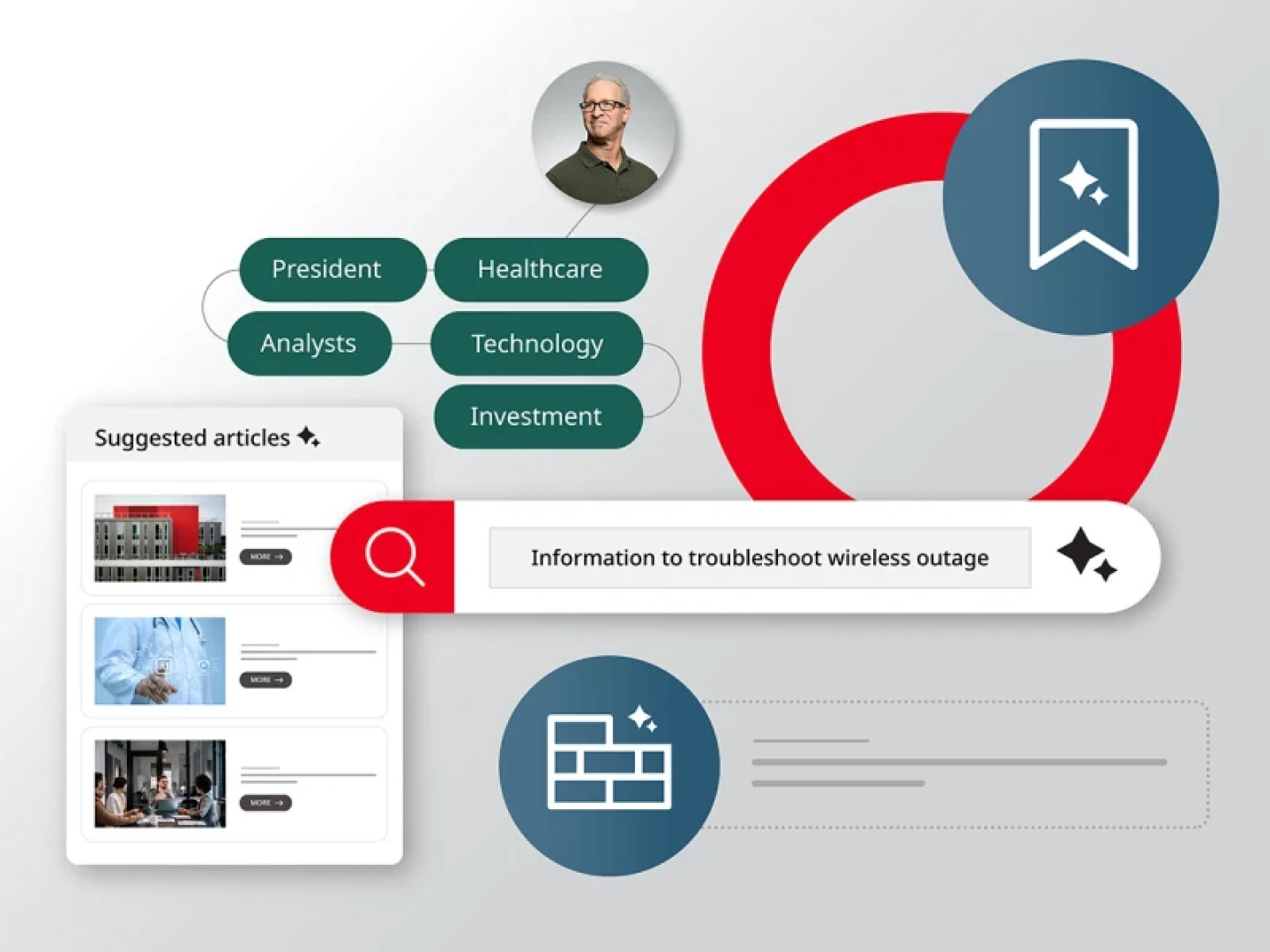
The integration of AI in content management systems is revolutionizing how businesses operate, driving engagement and enabling innovative solutions.
Brightspot’s content management platform is at the forefront of this transformation, offering AI capabilities that empower organizations to achieve remarkable, yet safe and secure, outcomes.
Here are four examples of companies across different industries that are leveraging AI through Brightspot to enhance their operations, improve customer outcomes and drive bottom-line results.
AI ha moved from experiment to infrastructure across industries, and the organizations seeing the most impact aren’t necessarily the ones with the biggest technology budgets. They’re the ones that have been deliberate about where and how they apply it. A few patterns emerge from the customer stories in this article:
- Start focused, then scale. Whether it’s monitoring regulatory changes across 34 countries or aligning curriculum to 38 states’ worth of educational standards, none of these use cases were built overnight. Each started with a specific, high-value problem and expanded from there. Trying to solve everything at once is a reliable way to solve nothing well.
- Content is data — treat it that way. The shift from thinking about content as an archive to thinking about it as structured, reusable data is foundational to everything else. It’s what makes personalization, automation and intelligent delivery possible at scale. Without it, AI has little to work with.
- Human oversight remains non-negotiable. Across every example here, AI accelerates workflows — it doesn’t replace the editorial judgment that keeps content accurate, compliant and trustworthy. The most effective implementations combine AI automation with clearly defined human approval steps.
- Culture moves slower than technology. Several of these teams noted that internal adoption — not the AI itself — was their biggest challenge. Getting teams to rethink how they work, rather than just layering AI on top of existing processes, is where the real transformation happens.
AI-driven personalization and recommendations
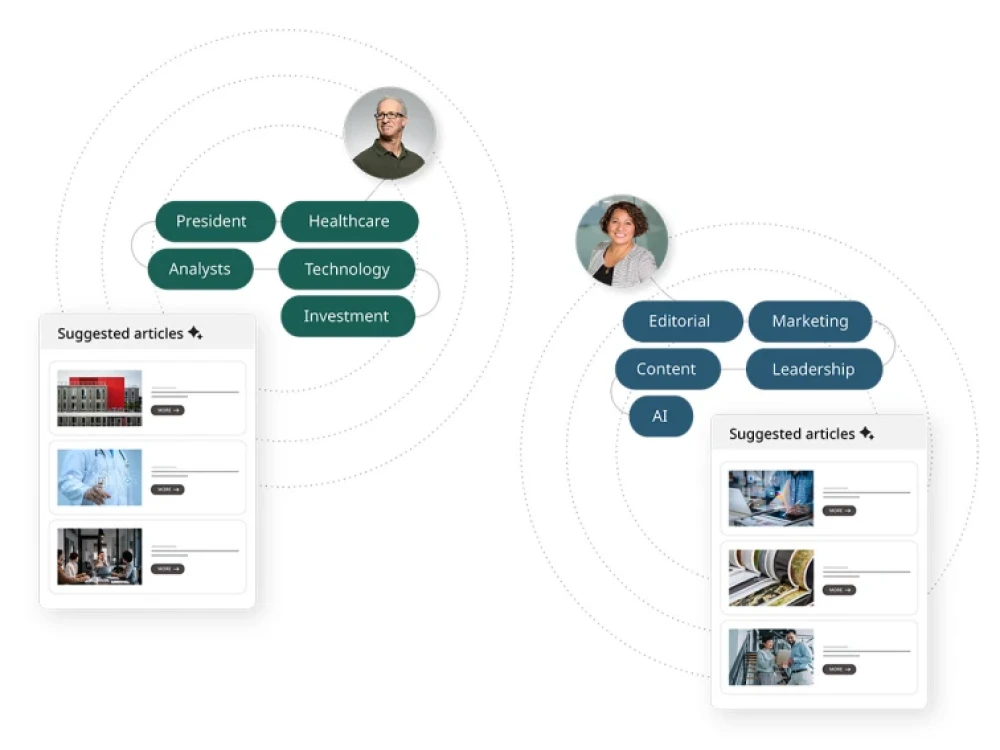
A leading global consulting firm, known for its in-depth industry expertise and strategic advisory services, utilizes a sophisticated taxonomy of user and content attributes.
By integrating AI-powered recommendation engines via Brightspot, the firm dynamically generates personalized reading lists tailored to each user’s interests and needs.
The AI continuously updates these recommendations with new insights, ensuring that users always have access to the most relevant and valuable content.
This approach has significantly enhanced user engagement and satisfaction, driving higher conversion and retention rates for readers relying on the firm’s thought-leadership content.
AI-powered regulatory monitoring for compliance-critical content
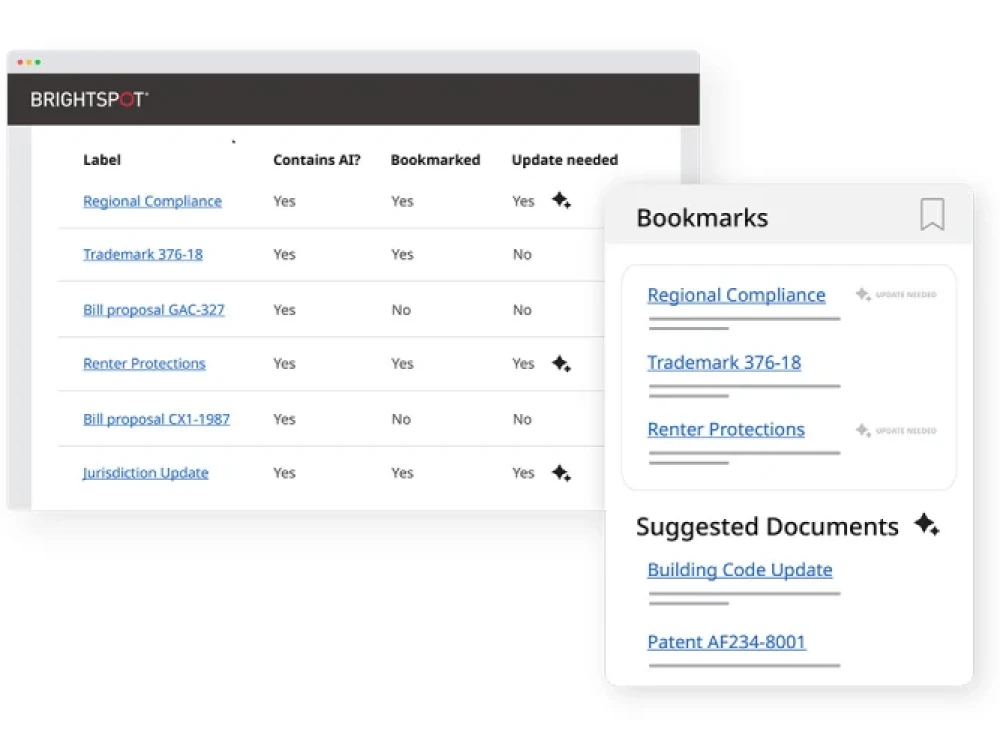
Barbour EHS has been helping organizations navigate environmental, health and safety regulations since 1941. Today, they’re responsible for tracking and interpreting regulatory changes across 34 countries for medium and large enterprises — a task that has historically depended on labor-intensive manual monitoring of government publications, emails and RSS feeds.
The challenge isn’t just volume. It’s accuracy. In regulatory compliance, publishing an incorrect safety threshold is a liability, not just a minor editing error. That raises the stakes considerably for any automation strategy.
If you get regulatory thresholds wrong, that’s not a place to be.
Working within Brightspot, Barbour EHS built an AI-driven system that pulls official regulatory documents on a daily basis and automatically compares new versions against prior ones, flagging changes and generating summaries that feed directly into editorial review workflows. The result is a faster, more reliable path from regulatory update to published guidance — without bypassing the human oversight that accuracy demands.
Beyond reactive monitoring, the team is also applying AI to horizon scanning: identifying emerging regulatory trends before they become compliance requirements. This gives customers more lead time to adapt — and positions Barbour EHS as a forward-looking intelligence partner, not just an information archive.

Scaling curriculum content for personalized K-12 learning
Stride K-12 operates in 38 states and Washington, D.C., providing online curriculum for students and teachers across a highly fragmented regulatory landscape. Every state has its own educational standards, and every course needs to be aligned to them — accurately, accessibly and at scale. Until recently, that alignment process relied on spreadsheets and largely manual effort.
The team is now using AI within Brightspot to automate that process from the ground up. A system that scans Department of Education websites and updates their standards database automatically has replaced what was previously a time-consuming, error-prone workflow. That structured data then powers a dynamic course-creation engine: one that can suggest content, generate metadata and assemble course variations tailored to specific state requirements — all without starting from scratch each time.
AI helps assemble courses, suggest content, generate metadata and support QA — all within Brightspot. This could make us at least 100x more efficient.
The efficiency gains are significant. Where Stride once had to build each course variation manually, AI now handles much of the assembly work, with human editors focused on quality assurance rather than configuration. According to the team, this shift could make their course creation process upwards of 100 times more efficient.
Looking ahead, Stride is working toward genuinely adaptive learning experiences — where AI surfaces enrichment or remediation content based on individual student performance, and adjusts delivery formats based on how students actually consume information today.
Streamlining site redesigns and content migration with AI

A top player in the technology sector employed Brightspot’s AI-driven tools to tackle the complex task of redesigning and migrating content from siloed legacy sites to their new Brightspot-powered multisite platform.
The AI models are able to analyze existing sites, identify key modules and map them to the new Brightspot themes. This automated process significantly reduced the time and manual effort required for each migration, allowing the company to quickly roll out updated sites with enhanced features and improved user experiences.
The AI’s ability to create visual representations of the intended UX using both existing web pages and Brightspot themes proved invaluable in ensuring rapid (and time-saving) implementations. An additional AI integration helped analyze legacy site content and map starter content to the new CMS in order to accelerate speed-to-market and user onboarding in the new CMS.
AI-powered knowledge management to accelerate customer support and satisfaction
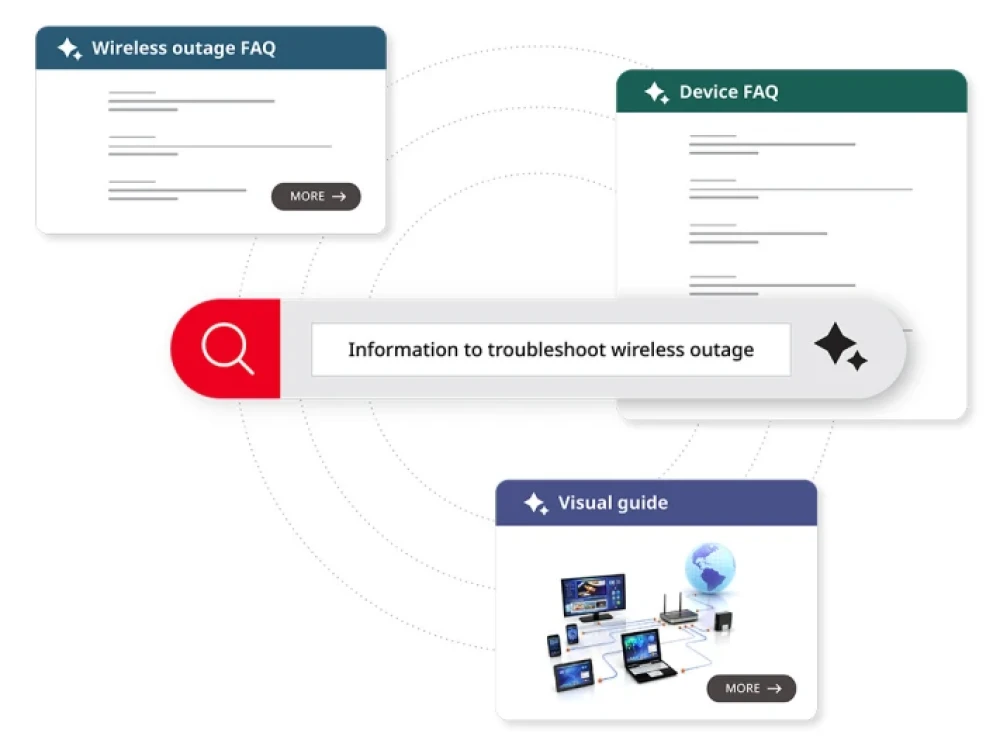
A major telecommunications provider harnessed the power of Brightspot’s AI capabilities to enhance its knowledge management systems.
By integrating AI into their CMS, the company developed guided assistance tools that provide employees with quick access to relevant information and resources when assisting customers with help-desk inquiries.
The AI-driven system analyzes user queries and delivers precise answers, along with suggestions for additional resources, reducing the time spent searching for information and improving productivity.
This innovation has not only streamlined internal operations but also contributed to better customer service, as employees are now able to access and share knowledge more effectively.
Brightspot customers are applying AI across a wide range of use cases, including personalized content recommendations, automated regulatory monitoring, curriculum content generation, site migration and knowledge management for customer support teams. The common thread is using AI to handle high-volume, repetitive tasks — freeing up editorial and content teams to focus on quality, strategy and judgment.
No. Brightspot’s AI features are designed to work out of the box, but the platform is also flexible enough to support customers who want to extend or integrate their own large language models. Barbour EHS, for example, built a custom document monitoring system on top of Brightspot’s AI capabilities to meet the specific demands of regulatory compliance work.
Yes, when implemented thoughtfully. Brightspot’s approach emphasizes AI-assisted workflows with human editorial approval at key stages — not fully automated publishing. For customers like Barbour EHS, where publishing inaccurate information carries real legal and safety consequences, that human-in-the-loop model is essential.
That depends on the complexity of the use case, but the customers featured here consistently recommend starting with a narrowly scoped, high-impact problem rather than a broad platform rollout. Quick wins build organizational confidence, and the lessons learned from an initial use case tend to accelerate everything that follows.
Yes. Stride K-12’s implementation is a strong example: using AI within Brightspot to automate standards alignment, assemble course variations and support quality assurance across a curriculum that spans dozens of states. The same underlying capabilities that power personalization in media or consulting contexts translate well to education.
Conclusion
These are just a few banner examples that illustrate the transformative potential of AI-powered solutions, and the flexibility of the Brightspot platform.
From personalized content recommendations to efficient site redesigns and enhanced knowledge management, AI is driving innovation and delivering tangible benefits across various industries.
Brightspot continues to support organizations in unlocking new possibilities with AI, helping them achieve their business goals and maintain a competitive edge in the digital landscape.
Contact us today to learn more about our platform’s AI capabilities and how Brightspot Content Management Platform can help your business adopt — and thrive — with AI.


