2026’s best headless CMS for enterprise teams: Compare the top platforms
- Modern enterprise CMS evaluations center on AI governance, multi-channel delivery and predictable total cost of ownership — not just feature checklists.
- A headless content management system decouples content from presentation, enabling the same content to reach websites, apps, digital signage, voice assistants and other channels through a single API layer.
- Brightspot differentiates on its hybrid architecture, combining headless API delivery with native editorial tooling, AI-powered workflows and built-in multisite governance.
- Platforms like AEM and CoreMedia offer deep ecosystem integrations but carry longer implementation timelines and higher services costs.
- Open-source options such as Strapi and Directus offer maximum data control but shift significant infrastructure and DevOps overhead to the buyer.
- Real-time collaboration, visual editing and governance maturity vary significantly across platforms and should be tested with your actual team and content models — not just reviewed from vendor documentation.
- A five-step evaluation framework — from requirements mapping and POC to TCO calculation — gives enterprise teams a repeatable process for reaching a confident platform decision.
Enterprise CMS decisions in 2026 focus on unifying content operations across brands, regions and channels. Teams are revisiting their stacks to consolidate tools, govern AI safely and ship global campaigns faster. Modern enterprises expect real-time collaboration, zero-downtime workflows and predictable total cost of ownership, and the CMS market now offers many platforms that address those needs.
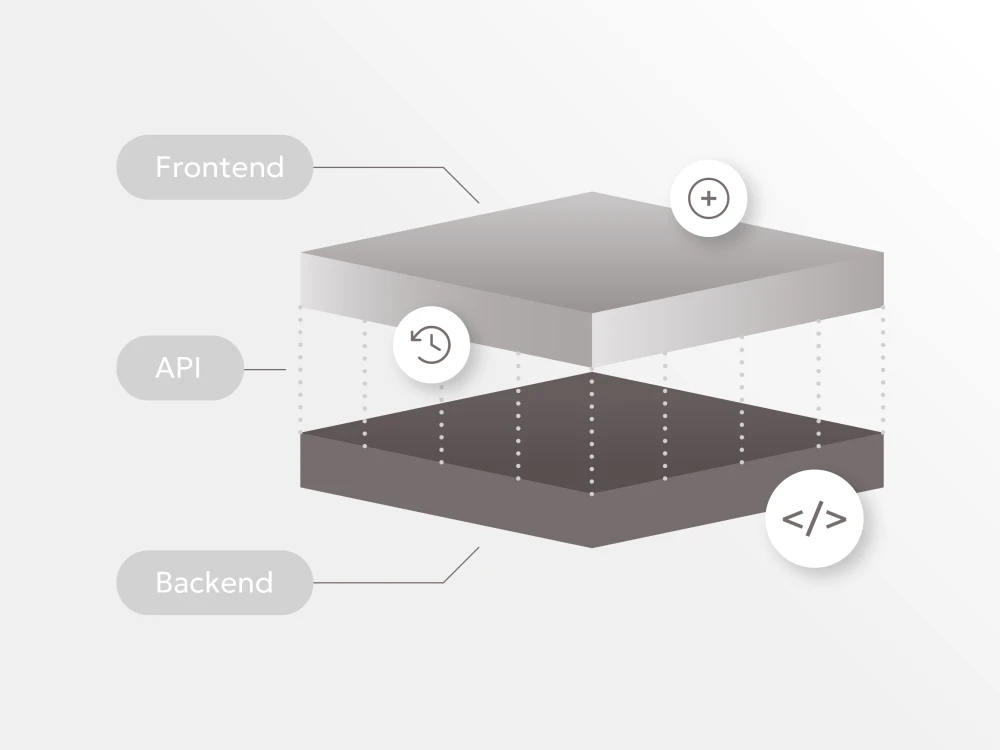
A headless CMS is a content management system that stores and manages content separately from the presentation layer, providing it via APIs to any front end, websites, mobile apps, kiosks or emerging channels.
This headless CMS comparison covers the platforms enterprise teams are evaluating most seriously in 2026. Below is a summary table, followed by in-depth assessments of each contender.





Brightspot is an enterprise hybrid CMS that combines headless API delivery with a built-in editorial experience. Content and marketing teams publish independently while developers retain full front-end control.
Key differentiators align with 2026 enterprise priorities:
- AI-powered content workflows. Brightspot integrates AI tools for content creation, SEO-optimized articles, social posts and real-time insights via Ask AI. This supports data-driven decision-making within the editorial interface.
- Multisite and multi-brand management. Built for complex organizational structures, Brightspot handles high-volume publishing, multisite governance and workflow automation across brands and regions.
- Predictable TCO and fast time to value. Unlike DXP implementations that can span many months with large services costs, Brightspot is designed for rapid deployment with lower integration overhead.
- Security, compliance and governance. Enterprise-grade security, role-based access control, audit trails and SSO are provided natively, not added as an afterthought.
Brightspot suits global enterprises that need headless flexibility, editorial independence, AI-assisted workflows and scalable multisite management, all in a single platform with predictable costs.
Learn more about Brightspot’s headless CMS architecture here or explore our CMS selection guide for more on what you need to know about selecting the best CMS for your enterprise needs.
Contentful is an enterprise headless CMS platform used by large organizations as a centralized content hub. It can be a strong option for complex omnichannel needs.
The platform offers mature localization features and deep enterprise integrations, making it a pragmatic choice for organizations committed to a composable architecture.
Pros:
- Mature API ecosystem with extensive third-party integrations
- Strong localization and multi-brand content modeling
Large community and well-documented developer resources
Cons:
- Pricing can become costly as usage scales, and some teams pay for features they do not use
- Visual preview and orchestration capabilities often rely on separate products or add-ons
- Real-time collaboration is limited compared with platforms built for concurrent editing
Best for: Large enterprises already invested in a composable architecture that can absorb additional tooling costs for visual editing and orchestration.
Sanity positions itself as a content operating system that coordinates creation, governance, distribution and optimization end to end. Its React-customizable Studio gives developers extensive flexibility, and its real-time collaboration supports concurrent editing.
Sanity’s Studio v4 supports governed AI and predictable TCO, indicating the platform’s investment in enterprise capabilities beyond its developer-first roots.
Pros:
- Real-time collaboration that supports concurrent editing
- Fully customizable Studio built in React
- Strong developer experience with flexible content modeling
- Free tier available; Growth plan starting at $15 per seat per month
Cons:
- Steeper learning curve than many CMS platforms
- Requires strong front-end engineering resources, increasing developer dependency for routine editorial changes
- Per-seat pricing can become costly at enterprise scale with large teams
Best for: Developer-led organizations that value real-time collaboration and deep Studio customization, and have the engineering resources to support non-technical editors.
Strapi is the leading open-source headless CMS, offering self-hosting and full code-level customization. It provides both REST and GraphQL APIs by default, giving development teams flexibility in how they consume and deliver content.
Maximizing control requires operational responsibility. Enterprises must manage hosting, security patching, scaling and uptime internally, or choose Strapi Cloud to offload some of that burden.
Pros:
- Fully open-source with no vendor lock-in
- Self-hosting enables complete data ownership and control
- REST and GraphQL APIs included by default
- Active open-source community and plugin ecosystem
Cons:
- Self-hosted deployments require dedicated DevOps resources for infrastructure, scaling and security
- Strapi Cloud plans start around $29 per month for basic hosting, but enterprise self-hosted deployments incur significant infrastructure costs
- Enterprise governance and workflow features are less mature than proprietary alternatives
Best for: Engineering-led organizations that prioritize data ownership, self-hosting flexibility and full code-level control over convenience.
Storyblok is aimed at marketing-heavy enterprise teams that want visual editing without heavy developer involvement in day-to-day content updates. Its component-based content modeling promotes reusability and consistency across pages and sites, making it easy for non-technical users to assemble and publish content quickly.
Pros:
- User-friendly visual editor with real-time preview
- Component-based architecture encourages content reuse and brand consistency
- Lower developer dependency for routine content updates
- Strong multi-language and multi-site support
Cons:
- Advanced governance and personalization features may require workarounds or third-party integrations
- Less suited for enterprises with complex compliance or targeting requirements out of the box
- Customization depth is more limited than code-first platforms
Best for: Marketing and brand teams that need fast, visual page-building with reusable components and minimal developer dependency for everyday content work.
CoreMedia is a hybrid headless enterprise CMS designed for complex content scenarios at large global brands. It focuses on experience orchestration, DAM integration and personalization, with functionality for sophisticated publishing workflows. The platform combines visual editing with API-driven omnichannel delivery, making it suitable for complex digital ecosystems.
Pros:
- Deep DAM integration and content personalization
- Experience orchestration across complex digital ecosystems
- Strong fit for retail, media and manufacturing organizations
- Strong visual editing alongside API-first delivery
Cons:
- Implementations in the hybrid/DXP space are typically longer and more services-heavy
- Higher total cost of ownership due to customization and integration complexity
- Smaller community and ecosystem compared with pure-play headless platforms
Best for: Global retail, media and manufacturing enterprises that need deep DAM integration, personalization and orchestration across complex digital ecosystems.
AEM is a common choice for enterprises standardized on Adobe’s marketing stack. Its strengths include site management and mature multisite, multilingual features, along with Creative Cloud integrations for organizations already invested in Adobe tools.
Pros:
- Full digital experience platform with a complete marketing suite
- Deep integration with Adobe Creative Cloud, Analytics and Target
- Mature multisite and multilingual capabilities
- Strong content authoring and site management tools
Cons:
- Implementations can span many months with large services costs
- AEM supports headless delivery, but rapid experimentation may require extra components
- High total cost of ownership, including licensing, services and ongoing maintenance
- Complexity can slow down editorial agility for teams not deeply trained on the platform
Best for: Large enterprises deeply invested in the Adobe ecosystem that can absorb long implementation timelines and significant services budgets.
Prismic offers a solid developer experience paired with an easy-to-use interface for content creators. Its Slice Machine encourages reusable content sections, helping teams separate content from layout while maintaining a friendly editor experience. Prismic is also a good match for global companies needing multi-language support.
Pros:
- Clean developer-editor handoff with Slice Machine
- Intuitive editing UI that non-technical users can adopt quickly
- Strong multi-language and localization support
- Component-driven content model promotes consistency
Cons:
- May lack deeper enterprise governance, workflow and personalization features that larger organizations require
- Ecosystem and integration marketplace are smaller than more established competitors
- Less suited for highly complex, multi-brand enterprise deployments
Best for: Mid-to-large teams that value a component-driven content model, strong multi-language support and a clean developer-editor handoff.
Hygraph is a headless CMS built around GraphQL, where every content type, query and relationship is expressed through GraphQL natively. It is a solid option for businesses integrating content from multiple sources and suits composable architectures and advanced developer tools.
Content federation — the practice of unifying content from multiple back-end systems like databases, legacy CMSs, PIMs and DAMs into a single API layer — is Hygraph’s main strength, allowing teams to query all content sources through one endpoint.
Pros:
- GraphQL-native architecture for flexible queries
- Content federation unifies disparate back-end systems into a single API
- Strong fit for composable, microservices-based architectures
- Advanced developer tooling and schema management
Cons:
- Steep learning curve for teams without GraphQL experience
- Less intuitive for non-technical editors compared with visual-editing platforms
- Enterprise governance and editorial workflow features are less mature
Best for: Developer-heavy organizations that already use or plan to adopt GraphQL and need to federate content across disparate back-end systems.
Cosmic is an API-first platform that emphasizes managed infrastructure and emerging AI agent capabilities. As vendors add AI into workflows and automation, Cosmic’s agent layer is an early example of this trend, allowing teams to automate content operations with minimal infrastructure management.
Pros:
- Lightweight, API-first architecture with managed hosting
- Early AI agent capabilities for content automation
- Simple onboarding and fast time to first value
- Clean developer experience with REST and GraphQL support
Cons:
- Smaller player in the enterprise space with a less mature ecosystem
- Enterprise support SLAs and long-term vendor stability warrant careful evaluation
- Fewer built-in governance and compliance features than established enterprise platforms
Best for: Small-to-mid enterprise teams that want a lightweight, API-first CMS with managed hosting and early AI automation features.
Directus wraps your existing database and exposes REST and GraphQL APIs over your data, making it possible to turn existing relational databases into a headless content layer without migrating data. This database-first approach appeals to engineering teams with significant existing data infrastructure.
Pros:
- Instantly creates APIs over existing databases with no data migration
- Supports both REST and GraphQL
- Open-source with self-hosting option for full data control
- Highly flexible data modeling tied directly to database schema
Cons:
- Functions more as a data-access layer than a full-featured editorial CMS
- Enterprises needing rich editorial workflows, visual editing and content governance may find it insufficient on its own
- Requires developer resources to build editorial experiences on top of the API layer
Best for: Engineering teams that need to expose existing relational databases as content APIs with minimal migration effort.
Enterprise evaluations that move efficiently from long list to decision typically follow a structured process: build a shortlist based on real requirements, run a proof of concept using actual content models, measure performance and localization, validate editorial workflows and governance, and calculate total cost of ownership including seats, integrations and services.
The five-step framework below will help your team move from long list to shortlist to a confident final decision.

Before evaluating any platform, document your organization’s specific requirements to avoid choosing a CMS that over- or under-serves your needs. Modern enterprises expect real-time collaboration, zero-downtime workflows and predictable TCO, but the weight of each requirement varies by organization.

The best enterprise headless CMS balances developer velocity with editorial productivity. On one end of the spectrum are code-centric platforms that prioritize developer control; on the other are hybrid systems and DXPs that emphasize editor UX, governance and integrated experience features.
Run hands-on trials with both editorial and developer stakeholders using real content models, not demo data. Specifically test:
- Visual editing and in-context preview for editors
- API flexibility (REST, GraphQL, or both) for developers
- Workflow configuration without code changes
- Real-time collaboration support
Some platforms’ real-time collaboration is limited compared with those built for concurrent editing, which is why hands-on testing with your actual team matters more than any feature checklist.

Enterprise teams operating globally need fast delivery, effective localization workflows and confidence that the platform scales with growth. During your proof of concept, measure:
- API response times and CDN edge delivery latency, testing from multiple geographic regions representative of your audience
- Localization capabilities, including supported locales, translation workflow integrations and locale-specific content branching
- Scalability under load, by simulating traffic spikes, concurrent editors and high-volume API calls to identify bottlenecks before they become production problems
A performance benchmarking checklist — covering response times, cache hit rates, time-to-first-byte across regions and concurrent editor limits — should be a standard deliverable from every POC.

AI is now a standard part of enterprise content operations. Teams are revisiting CMS stacks specifically to govern AI safely and ship global campaigns faster. Safe, governed AI integration separates mature platforms from early experiments.
Evaluate each platform on:
- Built-in AI features, such as content generation, optimization and insights, versus bring-your-own-AI integrations
- AI governance controls, including audit trails for AI-generated content, approval workflows and safeguards for bias and accuracy
- Data privacy, including where AI models process content data and whether the CMS supports on-premise or private-cloud AI options
AI governance in a CMS context refers to the policies, controls and audit mechanisms that ensure AI-generated or AI-assisted content meets organizational standards for accuracy, brand voice, compliance and ethical use. Brightspot’s integrated AI tools, such as Esca AI and SEO-optimized content generation, illustrate how native, governed AI can operate within a CMS, with audit trails and approval workflows built into the editorial experience.

Sticker price rarely tells the full story. Enterprise teams must account for every cost layer to make an informed decision.

A headless CMS stores and manages content separately from the presentation layer, delivering it via APIs to any front end — websites, mobile apps, digital signage, voice assistants and other channels. For enterprise teams, this architecture enables publishing at scale across multiple brands and regions without rebuilding the back end for each new channel.
The most capable enterprise platforms provide robust APIs and front-end framework freedom for developers while offering visual editors, configurable approval workflows and in-context preview for marketing and editorial teams. Hybrid platforms are purpose-built to serve both audiences within a single system, so neither group becomes a bottleneck to publishing.
Role-based access control, configurable approval workflows, audit trails, single sign-on, localization support, content scheduling, visual preview and strong REST or GraphQL APIs are table stakes for enterprise deployments. AI governance capabilities — including audit trails for AI-generated content and approval workflows — are increasingly required as teams integrate AI into editorial operations.
Platform licensing is only one input. A complete TCO model should account for per-seat costs projected over three years, implementation and migration services, hosting and infrastructure (especially for self-hosted options), integration development, training and ongoing support tiers. Platforms that bundle core capabilities — editing, governance, AI and multisite management — reduce integration risk and simplify forecasting compared with those that require paid add-ons for essential features.
Initial setup complexity, higher developer dependency for front-end implementation, the overhead of integrating multiple best-of-breed tools and unpredictable TCO growth as teams and content volume expand are the most frequently cited challenges. Running a proof of concept with actual content models and real stakeholders — rather than demo data and vendor walkthroughs — surfaces these issues before they become production problems.
AI is now embedded in content operations across creation, optimization and localization. The governance question is how platforms ensure AI-generated or AI-assisted content meets organizational standards for accuracy, brand voice, compliance and ethical use. Platforms with native AI tools that include audit trails and approval workflows built into the editorial interface offer more control than those requiring external AI integrations managed outside the CMS.
Brightspot combines headless API delivery with a built-in editorial experience, native AI-powered workflows, enterprise-grade governance and scalable multi-site management — all on a predictable subscription model. Unlike DXP implementations that can require extensive services engagements, Brightspot is designed for faster deployment with lower integration overhead, making it well-suited for global enterprises that need both developer flexibility and editorial independence in a single platform.
Essential enterprise features include role-based access control, configurable approval workflows, audit trails, single sign-on (SSO), localization support, content scheduling, visual preview and strong REST or GraphQL APIs for integration with existing systems. For a deeper look at must-have capabilities, see this guide to the best CMS features for large enterprise organizations.
A headless CMS provides content through APIs, allowing the same content to be consumed by websites, mobile apps, digital signage, voice assistants and other channels without duplicating effort, enabling omnichannel publishing from a single source of truth.
Common challenges include greater initial setup complexity, higher reliance on developer resources for front-end implementation, the need to integrate multiple best-of-breed tools, and ensuring that total cost of ownership remains predictable as teams, sites and content volume grow. Understanding the pros and cons of headless CMS before committing helps teams plan for these realities; read our guide for more about these pros and cons.